


Meet Me at the Midway
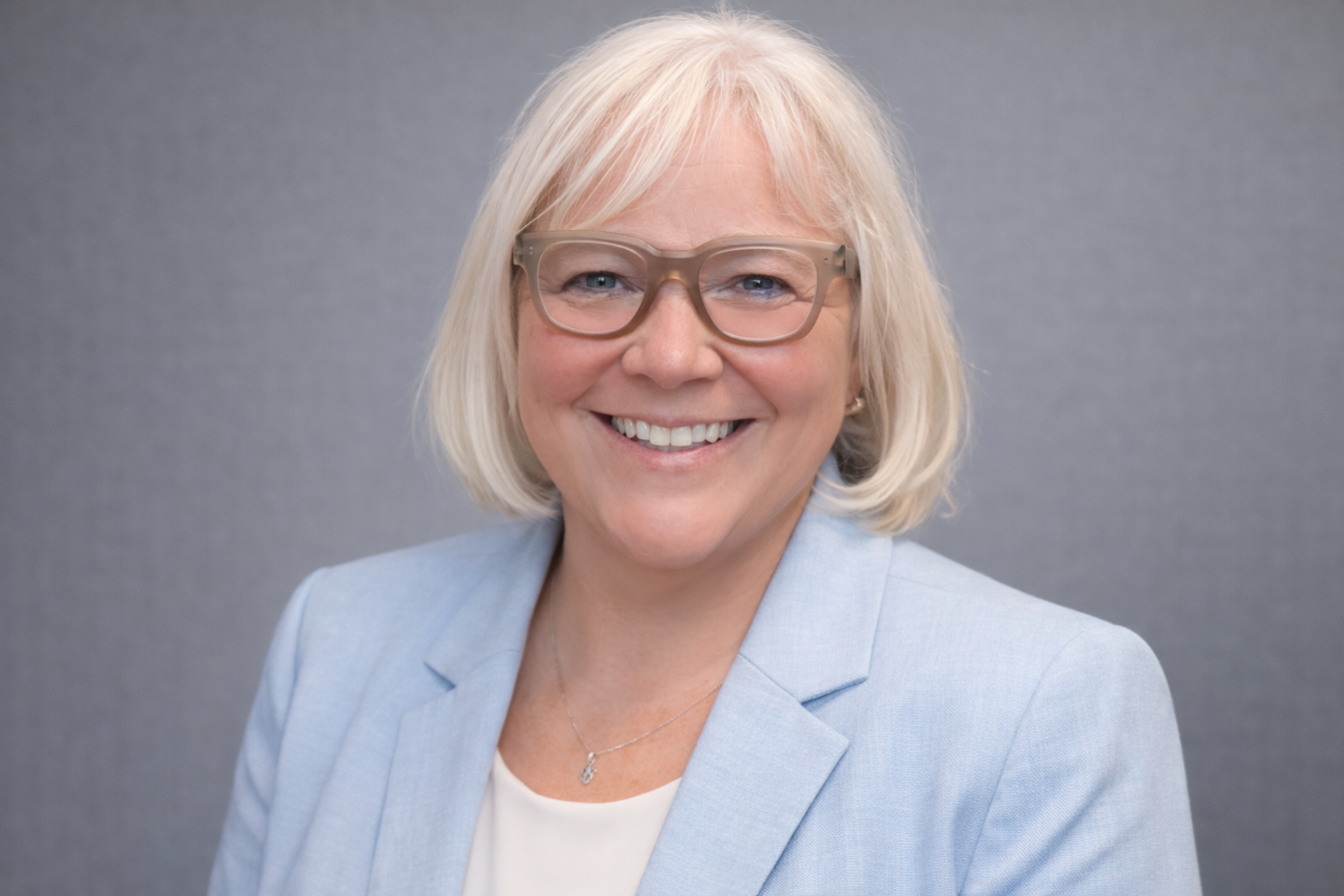

Posted late. I missed Monday. I was at another kind of fair.
Two weeks ago, I was at the Gallia County Junior Fair with my grandbabies. But this week, I was at a fair that came in on a truck.
Epic’s User Group Meeting is in Verona, Wisconsin, and this year the theme was Meet Me at the Midway.
So, in true Epic fashion, they built one.
Pennant flags stretched overhead. Carnival lights. Carousel horses. Games. Fair food. A tractor you could climb onto. And around one corner, under a sign that read Livestock Showcase — Meet the 4-Legged Champions of the Fair, stood a Highland cow — blonde, shaggy, completely unbothered by the thousands of healthcare people wandering past her, and wearing a Grand Champion ribbon.
I laughed out loud, leaned over the rope, put my hand on her back and had somebody take my picture.
Because, well, how could you not want your picture with that cute cow?
I showed sheep at the Gallia County Junior Fair. My kids did, too. And while I’ve already written about what that place means to me, standing there in Wisconsin reminded me of something else the fair taught me a long time ago.
The part everyone sees is rarely where most of the work happened.
Long before the ribbon, there were early mornings, muddy boots, stubborn animals and hours when nobody was watching. By the time you walked into the ring, most of the story had already been written.
I didn’t have words like transformation or change management for that then.
Those words are part of my every day language now. And somewhere between the Highland cow and my first session of the week, I realized that’s probably why this whole midway thing worked on me.
Because a user group meeting is a little bit like a fair.
Fifteen thousand or so of us—in person. Nearly five hundred sessions. Health systems from everywhere bringing the things they’ve been working on — a governance structure, a safety net for imaging follow-ups, a nursing workflow they finally got right, an adoption strategy that took eighteen months and three false starts.
You show people what worked and, if you’re willing, what didn’t. Someone asks a question you hadn’t considered. You hear how another organization solved a problem you’ve been staring at for six months. You scribble something in your notes and think, We could actually do that.
For a few days, the work gets looked at. And this year, there was a lot to see.
Last August, Epic’s AI assistants were introductions. Art, Emmie and Penny — three names on a slide, a roadmap and a promise about what might eventually be possible.
I remember writing eventually in my notes.
This August, Penny is coding radiology and emergency medicine charts, flagging the ones she isn’t sure about for a human. Agent Factory — Epic’s platform for building and supervising AI agents — is a now possibility. Cosmos has a tool called Curiosity that can answer population health questions and help predict an individual patient’s risk. And in November, Ergo arrives: one clinician interface designed to flex to what the moment requires and pull those capabilities together.
Twelve months. That’s the distance between eventually and November.
And as I sat there listening, the question I kept coming back to wasn’t really about any one product.
It was:
What if?
What if technology really could give clinicians meaningful time back?
What if patients didn’t have to understand the architecture of a healthcare system just to figure out how to get care?
What if the digital front door actually felt like a friend’s front door?
What if AI could take on more of the searching, sorting, routing, documenting and administrative work that consumes so much of healthcare, leaving people with more time to do the work only people can do?
And maybe the biggest one:
What if the point of all this technology isn’t to make healthcare more technological? What if it’s to make healthcare more human?
That’s the part of this moment I find most exciting.
Not AI for the sake of AI. Not another shiny thing to implement because everyone else is implementing it.
It is about possibility..
Healthcare has no shortage of constraints. We know the regulations, staffing challenges, budgets, workflows, dependencies and all the reasons the seemingly simple thing isn’t actually simple. Most of those constraints are real.
But if we start there every time, eventually we begin designing the future around the limitations of the present.
I believe that, like Epic, we need to let what if? have the floor for a minute.
Then comes the real work. Because I’ve been doing this long enough to know that technology showing up is only the beginning. Whether any of it changes one thing for one patient depends on what happens after the keynote — who owns the decision, how we prioritize, whether the people closest to the work have a voice, and whether we’re honest about what the software can do today versus what’s promised for later.
My favorite thing I heard all week came from a panel on feature adoption. One health system has a rule: if you want to purchase technology outside your EHR, your business case has to address whether your EHR will have that capability within eighteen months.
I love that. And not because the answer always has to be no. Sometimes the right answer absolutely will be to buy something else. But let’s ask the question.
Let’s commit to learn and know what’s coming. To understand what we already own and what it can do for us today.
Let’s be clear about the problem you’re trying to solve. Then make the decision together. Possibility is awesome— but it needs discipline if it’s ever going to become progress.
And I think that’s what I brought home from the midway.
We absolutely need some people willing to look at what’s coming and ask what if?
What if we didn’t have to do it the way we’ve always done it? What if this could be easier? What if we could give people time back? What if we stopped designing tomorrow around every limitation we have today?
And then— we need people willing to do the thousand mostly invisible things between a great idea on a stage in Wisconsin and a better Tuesday afternoon for a patient or a clinician back home.
The theme was Meet Me at the Midway, and it resonated with me. Not just because I’m a fair fan.
A midway is a place between things. You walk it on your way from one place to another, with the lights coming on overhead and people moving in every direction. You stop for something you hadn’t planned on. You see something that makes you curious.
Maybe you ride the carousel even though you’re a grown woman at a healthcare technology conference and probably should be checking your email.
For a little while, you let yourself wonder.
Two weeks ago, I sat at the Gallia County Junior Fair with my grandbabies and remembered where I came from.
This week, I stood on a midway in Wisconsin thinking about where we’re going.
Turns out, I needed both.
The fair kid in me knows there is always more work behind the thing you can see.
The leader in me knows a big idea doesn’t matter much unless someone figures out how to make it real.
And the part of me that is still curious enough to climb onto a carousel horse hopes we never get so busy doing either one that we stop asking the question in between:
What if?
Then let’s see what we can build from there.
Hold your lantern, carry your anchor.
— Heather
Speak Truth. Trust Yourself. Anchor Here. You’re OK.


Comments